Gallery

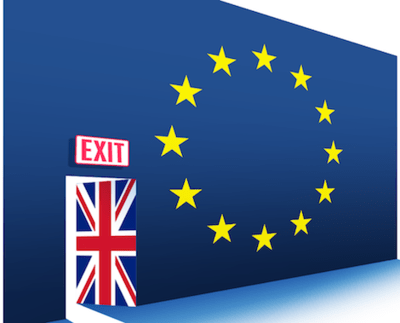
We Shouldn’t Let the Immigration Debate Decide Our Position in Europe

6a00d83451b31c69e201901bfd44b5970b-400wi

This is a copy of a piece I wrote for Huffington Post this week.  You can find and comment on the original here http://www.huffingtonpost.co.uk/ian-middleton/eu-referendum-immigration_b_9322718.html


So here it is. After years of campaigning and complaining, manoeuvring and cajoling, half-truths and good old fashioned British pig-headedness, the moaning masses of middle England have finally got their referendum.

I say ‘their’ referendum because this isn’t being staged at great expense for those of us who want to stay part of Europe. It’s not even for those who don’t really give a toss either way.

It’s certainly not for those more outward looking souls, who appreciate the many advantages of being a member of the European club. The easy movement between states (yes that does apply to us as well as all those annoying refugees and migrants) and the free transport of goods. Funding for urban and industrial renewal. Numerous environmental improvements to beaches, rivers and the countryside, including controls on things like GMOs. Human rights, animal rights, consumer rights. Cheaper phone charges and easier and cheaper travel and currency exchange. Social welfare protection and labour rights, and a panoply of other advantages that most people take for granted and will miss when they’re gone.

No, it’s a referendum for misguided and ill-informed little-Englanders, draped in Union flags, firm in the belief of two world wars and one world cup and certain the word ‘Great’ attached to Britain means something other than the first letter on a sticker they slap on the back of their booze cruise charabang, just to remind those envious foreigners that they were unlucky enough to be born on inferior soil.

But moreover, it’s a referendum for politicians who have been looking at continental Europe down the wrong end of the telescope for so long now, they just don’t realise how small this country has become on the world stage. A myopic concern about how much money we pay to Europe and a studied ignorance of the huge returns our EU membership generates.

Most people who focus on our payment to Brussels like to remind us what else we could do with that money. Yet with a growing national debt, and stubbornly high deficit, any such savings would likely fall into the same black hole as most of the rest of our national finances. Either that or it would go towards servicing the country’s circa £50bn annual interest payments, paid in large part to European banks anyway.

It’s not 1975. The geo-political landscape has changed around us since the last time we decided if we wanted to be a part of Europe. Yes, back in the swinging 70s it was the ‘Common Market’, but by necessity and common interest it’s become more than that. Those advocating some kind of return to a simple trading relationship are ignoring both the reality of our reduced place in the world and the promiscuity of world markets.

Neither is it 1938, even though Cameron’s Chamberlain moment was equally as hollow. Just like his pre-war counterpart, the agreement he reached in Brussels was peripheral and disposable, focussing as it did on the false polemic of immigration and border control.

It was a pantomime, with Donald Tusk and Angela Merkel as the ugly sisters to Cameron’s Cinderella. Shouts of “they’re behind you” were evident from the likes of UKIP and Front National pointing to the ‘hordes’ or ‘swarms’ or ‘bunches’ of ‘migrants’, ‘refugees’ or ‘immigrants’, depending on which description David Cameron and the BBC have alighted on this week.

I totally agree that EU democratic and regulatory processes are in desperate need of reform, but these weren’t the points that Cameron argued. Driven by domestic pressures, piled on by a widening xenophobic rhetoric, he was pushed into a rushed and ill-conceived round of negotiations that resulted in him metaphorically claiming ‘peace in our time’ outside Number 10. It was a performance put on to give him a platform to launch the referendum that we all knew was coming, and the critic’s reviews weren’t great.

Sadly for him, us, and the rest of Europe, this was a missed opportunity that could have sparked a trans-national debate about the real future of the EU and brought about radical changes to shape it into something more even-handed and responsive to the needs of all member states.

But instead, Cameron wasted what could have been his real place in history for the sake of a thumbs up from the likes of Farage, Gove and Galloway whilst gaining little tangible return for the UK, save for some token restrictions on benefit payments to migrants who rarely claim them anyway.

In fact it’s recently been revealed that the UK government has no idea how much immigration costs us, nor how much migrants contribute to our economy. But let’s not let a little thing like lack of facts get in the way of a nicely staked out scapegoat.

And while we’re on the subject of discrimination, we mustn’t forget those hard-pressed city bankers quaking in their handmade brogues, terrified that they may be penalised for being outside the Eurozone. That of course, amid the posturing about immigration, was the main concern for Cameron and his paymasters. Essentially he was in Brussels to fight for the right to discriminate against the poor whilst protecting the interests of the obscenely rich, although of course that wasn’t so eagerly reported.

And there we have it. The crux of all this political, psychological and media-spun mendacity – Corporate interest. Insular businesses seeking to rid themselves of the European interference and regulation that keeps all the rest of us safer and better looked after. The refugee and migrant crises couldn’t have come at a better time for these vested interests to galvanise public opinion in favour of an out vote.

On this flimsiest of pretexts, and on evidence largely pulled out UKIP’s collective backside, we’re potentially going to launch ourselves into one of the biggest national disasters for several generations. The ‘Brexit’ silo mentality that is about as relevant in today’s globally connected society as statutes recorded on vellum.

One of the greatest achievements and advantages of the EU is freedom of movement between states. It’s a harbinger of a future globalised socio-economic system where borders and statehood will be irrelevant. One where the term ‘economic-migrant’ will no longer be a thinly veiled insult, just as it wasn’t when we and other nations economically migrated across the globe centuries ago, annexing and occupying entire countries as we went. In that context, and in view of the Tories much vaunted ‘on your bike’ ethos, I find it perplexing that we now seem to regard our attraction as place of opportunity as a bad thing.

And while we’re on that subject, if I were a British migrant living on the continent I’d be feeling distinctly uncomfortable right now. Especially those who have lived there for longer than 15 years and are inexplicably denied the right to vote in a referendum that may well decide their future.

Those whistling tunes in the dark about independent trade agreements with Europe and other global partners will soon find that our status as the 5th richest nation in the world is built on foundations largely stamped with a CE logo. Already Sterling has plummeted on the news that Boris is heading for the lifeboats.

Much of our apparent wealth is generated by the financial sector and supported by our membership of the EU. Who will want to trade with us as a small individual nation with a growing national debt and a dwindling economic base? No wonder the city was such a key part of Cameron’s negotiations.

The finance sector is pretty much all we have left. We don’t have anything else to trade. China and the USA know this and have already warned us that a UK outside the EU will be of much less interest to them. The US in particular sees our connection with Europe as a valuable conduit into EU financial markets.

Uncoupling ourselves from the EU will be a long, painful and essentially irreversible process. We won’t wake up one day and see bluebirds over the white cliffs and a land of milk and honey for all. It will take years of debate, legal dispute and the unpicking of labyrinthine systems of regulation woven into our own statutory frameworks. A drawn out and retrograde process, during which I believe we’ll slowly come to see the folly of our ways.

And once we’ve closed our borders and thumbed our noses at one of the biggest trading blocs on the planet, it will be too late to realise that we’re now more of a Pekinese than a bulldog. An isle not so much sceptred as septic, poisoned by our own arrogance and bigotry, left entirely at the mercy of a broken political system where wealth goes one way, and protection is only there for those who can afford it.

As Britain shrivels into, at best, a tawdry tax haven in perpetual serfdom to a rich elite, we’ll come to the sad realisation that we’ve been sold a Jerusalem built on false promises and false flags. I wonder if border controls and apocryphal straight bananas will seem quite so important then.

Gallery

An Open Letter to Ian Hudspeth, Leader of Oxfordshire County Council, About Proposed Budget Cuts

ian-hudspeth-david-cameron-388796

Dear Mr Hudspeth

I was the Green Party Parliamentary Candidate for Banbury in May. I’ve met you a couple of times, the most recent being after the public meeting held in Banbury Town Hall as part of Oxfordshire County Council’s consultation process on the proposed additional £50m cuts to local services.

So it was with great interest that I read your correspondence with David Cameron, splashed across national headlines last week, which painted a clear picture of a Prime Minister with only a tenuous grasp on the realities of the demands he has made on local authorities such as Oxfordshire, where he also happens to be an MP.

At the meeting we briefly touched on the magnitude of the savings being demanded in the context of our national finances. I made the case that with a national debt of £1.56 trillion – nearly half of which was added by our Conservative Chancellor during the tenure of the last government – a deficit of £83bn and annual interest payments of around £43bn, saving £50m from local authority spending was the equivalent of trying to pay your mortgage off by skipping breakfast once a year.

Whilst these cuts will have virtually zero impact on the debt left to future generations, they will have a huge effect on those who depend on the front line services being withdrawn. In particular on adult social care facilities and the children’s centres you plan to close which were amongst Mr Cameron’s principal concerns.

Your reply to me was that we all had to “do our bit”. Well it seems from your response to the PM that ‘our bit’ has already been well and truly done.

As a local politician expected to deliver on these impossible polices, I’m sure you know that they are economically illiterate. Cuts to social care will impact on the health service as a whole. Cuts to support for young people have potential effects on social order. Cuts to public transport have serious implications for the workforce and people in isolated rural communities.

I hope you’ll agree with me that there’s a point where cuts can no longer be the solution to balancing the books. Personally I think we’re already well beyond that line in the sand.

So I’m confused by your own position on government policy, given that you continue to publicly affirm that you share Mr Cameron’s blind faith in the blunt instrument of austerity as the answer to all our problems.

You’ve also made much of the statistic that 2% of the county’s population consumes 50% of the finances. I’m sure the old, the sick and infirm are a great drain on our public services, but in a modern society surely those people should expect to be looked after by those of us who are better able to do so.

Do you feel perhaps that this 2% should be prepared to support the more lavish spending plans of our government in other spheres? The wasting of hundreds of billions to allow us to play our part in a thermonuclear Armageddon maybe. Or vanity transport projects that will allow people to get from London to Birmingham 15 minutes faster, when Oxfordshire County Council has just voted to cut local bus subsidies in the county.

Should Oxfordshire pensioners be made fearful of putting their heating on this winter but be comforted as they shiver in the dark that they are ‘doing their bit’? All this while the government you support hands over £5.9bn to private oil and gas companies – a figure well over a thousand times greater than the cuts we are being asked to make – and slashes support for local renewable energy projects, meaning we will miss EU emissions reductions obligations and become the only G7 country to increase spending on fossil fuels.

I really feel that you have to come down on one side of the fence or the other here. You can’t continue to support the cuts in public whilst apparently opposing them in private. As leader of the county council, the people of Oxfordshire deserve an unequivocal statement of your aims and allegiances.

You will no doubt be aware that Mr Cameron’s intervention in Oxford has now prompted requests from over 100 other councils to have a similar direct consultation with him over budget pressures. He also faces accusations of ministerial impropriety over his intervention with you.

So perhaps now would be a good time for hard-pressed council leaders such as yourself to make a firmer stand. You could set an example and refuse to pass what you have already told the PM is an impossible budget to balance in any morally defensible way. I know such actions come with potential repercussions, but if other council leaders followed your lead, how many mutinies could Westminster really handle? This could be your place in history calling!

Alternatively you could join the drive for the abolition or raising of the now outdated 2% referendum threshold on council tax increases. As you hinted at in your letter to Mr Cameron, selling the family silver can only plug the gaps for so long. If we want well funded local services, we should all be prepared to pay ‘our bit’ for them. Polls carried out by the Oxfordshire Green Party, The Oxford Mail and at your own consultation events have shown that people would be prepared to pay more council tax if they saw the money going to essential services.

Of course this would require the government to square the circle of increasingly expensive public services without any rise in taxation. But if they truly believe in localism, councils should surely be free to set their own local levy, unhindered by ideological thresholds dictated by central doctrine.

I think the people of Oxfordshire would welcome your further engagement with the PM on their behalf and with local activists on these matters. I personally look forward to your thoughts on how best to capitalise on what has now become a national talking point, and how we can use this new focus in the best interests of Oxfordshire residents and other similarly concerned groups across the country.

Gallery

Thank You

thatsthat-reducedHaving mostly recovered from last week’s final exertions I’ve now had time to take stock of The Green Party’s performance in the Banbury Constituency and I have to say I’m very pleased with the result.

I am disappointed that we missed retaining our deposit by only 225 votes, but I think we have ample recompense in the fact that we nearly tripled our vote share from 2010! Indeed in Oxfordshire as a whole we retained 4 out of 6 deposits and showed voter shares up to 9.2% and in one local result we actually came second! Well done to Jenny Tamblyn!

In Banbury itself we knew we were never going to win, but we largely achieved the goal we had set ourselves of raising our profile in the constituency and showing people that the Green Party is the rightful repository of support from anyone concerned about real social justice and progressive politics.

Nationally, The Green Party has seen over a million people demonstrating that voting for what you believe in is never a waste of time.  Our share of the vote was nearly 4 times what it was in 2010 and our membership increased by nearly 2000 in the two days after the election.  In Oxfordshire we’ve had 56 new members in the last 2 days!

We now need to build on that support and engage more than ever with a local and national dialogue about how we want to see our society shaped for the future. The Greens have always been a party with long term vision and I think, as the next 5 years unfold, that vision is going to be needed more than ever.

In the meantime I’d like to thank all the Green supporters in the constituency that voted for me, and those who campaigned for me, put up posters, leafleted, knocked on doors and stood in the street with me. You’re some of the unsung heroes of this campaign and you should be rightly proud of your achievement.

My gratitude of course also goes out to my dedicated campaign team and members of The Banbury and Cherwell Green Party branch. In particular my agent and campaign manager John Haywood, researcher and adviser Colin Clark, our Chairman Chris Manley, the irrepressible Lisa Miller for her exertions on Facebook, and all those others too numerous to mention who have worked so hard over the last 5 years to get us where we are now.

A special thank you goes to our press officer and my partner Fiona Mawson, who’s practical and emotional support was invaluable to me throughout the campaign, even though she beat me in the local elections!

After the result of the general election we now more than ever need to see a continuation of the Green surge to offer the people of Britain an alternative to the Conservative agenda of austerity and cuts and the holding of the poor and vulnerable to ransom to pay for the lifestyles of the rich and privileged.

Moreover we need to re-double our efforts to protect our cherished NHS from the clutches of private healthcare providers that will now be given a free reign by a government ideologically opposed to free and comprehensive state health provision.

I’ll remain as our Prospective Parliamentary Candidate (PPC) for the foreseeable future, unless my circumstances change or the local branch decide they want or need someone new.  So I’ll be keeping this website up and running as a place for me to drop the occasional post about local, national and global Green issues.  I hope people will choose to engage with me on them during that time.

If you’d like to read more I have two other blogs you might like to follow.  One on specific retail matters

fiftyshadesofretail.wordpress.com

and another on general political and human and animal rights issues

wavinganddrowning.wordpress.com

I also write regularly for Huffington Post

www.huffingtonpost.co.uk/ian-middleton

I hope we can keep the conversations going through what I think will be some very challenging years to come

Regardless of our differing ideologies I’m never one to miss an opportunity to quote Churchill in circumstances like these, so I’ll leave you with his well known words –

“This isn’t the end, it isn’t even the beginning of the end, but it might just be the end of the beginning”

Thanks again

Ian