
This is a copy of a piece I wrote for Huffington Post this week. You can find and comment on the original here http://www.huffingtonpost.co.uk/ian-middleton/eu-referendum-immigration_b_9322718.html
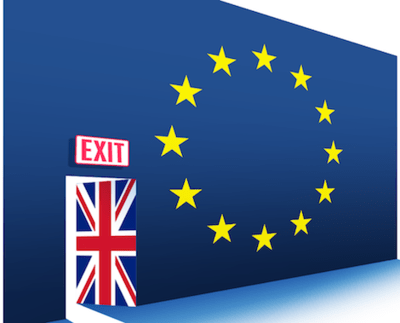
So here it is. After years of campaigning and complaining, manoeuvring and cajoling, half-truths and good old fashioned British pig-headedness, the moaning masses of middle England have finally got their referendum.
I say ‘their’ referendum because this isn’t being staged at great expense for those of us who want to stay part of Europe. It’s not even for those who don’t really give a toss either way.
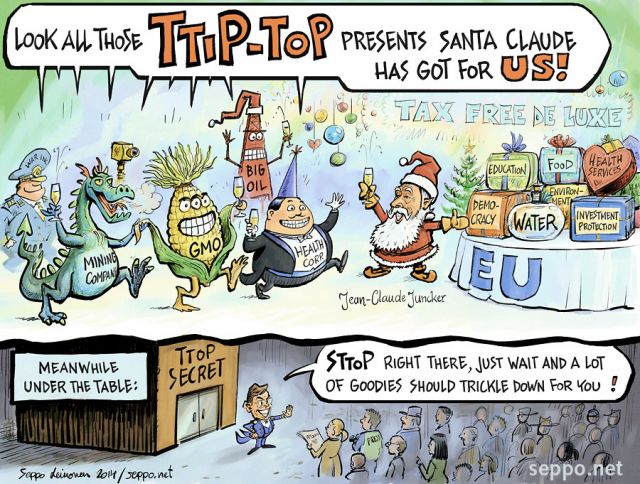
It’s certainly not for those more outward looking souls, who appreciate the many advantages of being a member of the European club. The easy movement between states (yes that does apply to us as well as all those annoying refugees and migrants) and the free transport of goods. Funding for urban and industrial renewal. Numerous environmental improvements to beaches, rivers and the countryside, including controls on things like GMOs. Human rights, animal rights, consumer rights. Cheaper phone charges and easier and cheaper travel and currency exchange. Social welfare protection and labour rights, and a panoply of other advantages that most people take for granted and will miss when they’re gone.
No, it’s a referendum for misguided and ill-informed little-Englanders, draped in Union flags, firm in the belief of two world wars and one world cup and certain the word ‘Great’ attached to Britain means something other than the first letter on a sticker they slap on the back of their booze cruise charabang, just to remind those envious foreigners that they were unlucky enough to be born on inferior soil.
But moreover, it’s a referendum for politicians who have been looking at continental Europe down the wrong end of the telescope for so long now, they just don’t realise how small this country has become on the world stage. A myopic concern about how much money we pay to Europe and a studied ignorance of the huge returns our EU membership generates.
Most people who focus on our payment to Brussels like to remind us what else we could do with that money. Yet with a growing national debt, and stubbornly high deficit, any such savings would likely fall into the same black hole as most of the rest of our national finances. Either that or it would go towards servicing the country’s circa £50bn annual interest payments, paid in large part to European banks anyway.
It’s not 1975. The geo-political landscape has changed around us since the last time we decided if we wanted to be a part of Europe. Yes, back in the swinging 70s it was the ‘Common Market’, but by necessity and common interest it’s become more than that. Those advocating some kind of return to a simple trading relationship are ignoring both the reality of our reduced place in the world and the promiscuity of world markets.
Neither is it 1938, even though Cameron’s Chamberlain moment was equally as hollow. Just like his pre-war counterpart, the agreement he reached in Brussels was peripheral and disposable, focussing as it did on the false polemic of immigration and border control.
It was a pantomime, with Donald Tusk and Angela Merkel as the ugly sisters to Cameron’s Cinderella. Shouts of “they’re behind you” were evident from the likes of UKIP and Front National pointing to the ‘hordes’ or ‘swarms’ or ‘bunches’ of ‘migrants’, ‘refugees’ or ‘immigrants’, depending on which description David Cameron and the BBC have alighted on this week.
I totally agree that EU democratic and regulatory processes are in desperate need of reform, but these weren’t the points that Cameron argued. Driven by domestic pressures, piled on by a widening xenophobic rhetoric, he was pushed into a rushed and ill-conceived round of negotiations that resulted in him metaphorically claiming ‘peace in our time’ outside Number 10. It was a performance put on to give him a platform to launch the referendum that we all knew was coming, and the critic’s reviews weren’t great.
Sadly for him, us, and the rest of Europe, this was a missed opportunity that could have sparked a trans-national debate about the real future of the EU and brought about radical changes to shape it into something more even-handed and responsive to the needs of all member states.
But instead, Cameron wasted what could have been his real place in history for the sake of a thumbs up from the likes of Farage, Gove and Galloway whilst gaining little tangible return for the UK, save for some token restrictions on benefit payments to migrants who rarely claim them anyway.
In fact it’s recently been revealed that the UK government has no idea how much immigration costs us, nor how much migrants contribute to our economy. But let’s not let a little thing like lack of facts get in the way of a nicely staked out scapegoat.
And while we’re on the subject of discrimination, we mustn’t forget those hard-pressed city bankers quaking in their handmade brogues, terrified that they may be penalised for being outside the Eurozone. That of course, amid the posturing about immigration, was the main concern for Cameron and his paymasters. Essentially he was in Brussels to fight for the right to discriminate against the poor whilst protecting the interests of the obscenely rich, although of course that wasn’t so eagerly reported.
And there we have it. The crux of all this political, psychological and media-spun mendacity – Corporate interest. Insular businesses seeking to rid themselves of the European interference and regulation that keeps all the rest of us safer and better looked after. The refugee and migrant crises couldn’t have come at a better time for these vested interests to galvanise public opinion in favour of an out vote.
On this flimsiest of pretexts, and on evidence largely pulled out UKIP’s collective backside, we’re potentially going to launch ourselves into one of the biggest national disasters for several generations. The ‘Brexit’ silo mentality that is about as relevant in today’s globally connected society as statutes recorded on vellum.
One of the greatest achievements and advantages of the EU is freedom of movement between states. It’s a harbinger of a future globalised socio-economic system where borders and statehood will be irrelevant. One where the term ‘economic-migrant’ will no longer be a thinly veiled insult, just as it wasn’t when we and other nations economically migrated across the globe centuries ago, annexing and occupying entire countries as we went. In that context, and in view of the Tories much vaunted ‘on your bike’ ethos, I find it perplexing that we now seem to regard our attraction as place of opportunity as a bad thing.
And while we’re on that subject, if I were a British migrant living on the continent I’d be feeling distinctly uncomfortable right now. Especially those who have lived there for longer than 15 years and are inexplicably denied the right to vote in a referendum that may well decide their future.
Those whistling tunes in the dark about independent trade agreements with Europe and other global partners will soon find that our status as the 5th richest nation in the world is built on foundations largely stamped with a CE logo. Already Sterling has plummeted on the news that Boris is heading for the lifeboats.
Much of our apparent wealth is generated by the financial sector and supported by our membership of the EU. Who will want to trade with us as a small individual nation with a growing national debt and a dwindling economic base? No wonder the city was such a key part of Cameron’s negotiations.
The finance sector is pretty much all we have left. We don’t have anything else to trade. China and the USA know this and have already warned us that a UK outside the EU will be of much less interest to them. The US in particular sees our connection with Europe as a valuable conduit into EU financial markets.
Uncoupling ourselves from the EU will be a long, painful and essentially irreversible process. We won’t wake up one day and see bluebirds over the white cliffs and a land of milk and honey for all. It will take years of debate, legal dispute and the unpicking of labyrinthine systems of regulation woven into our own statutory frameworks. A drawn out and retrograde process, during which I believe we’ll slowly come to see the folly of our ways.
And once we’ve closed our borders and thumbed our noses at one of the biggest trading blocs on the planet, it will be too late to realise that we’re now more of a Pekinese than a bulldog. An isle not so much sceptred as septic, poisoned by our own arrogance and bigotry, left entirely at the mercy of a broken political system where wealth goes one way, and protection is only there for those who can afford it.
As Britain shrivels into, at best, a tawdry tax haven in perpetual serfdom to a rich elite, we’ll come to the sad realisation that we’ve been sold a Jerusalem built on false promises and false flags. I wonder if border controls and apocryphal straight bananas will seem quite so important then.
 Ian Middleton